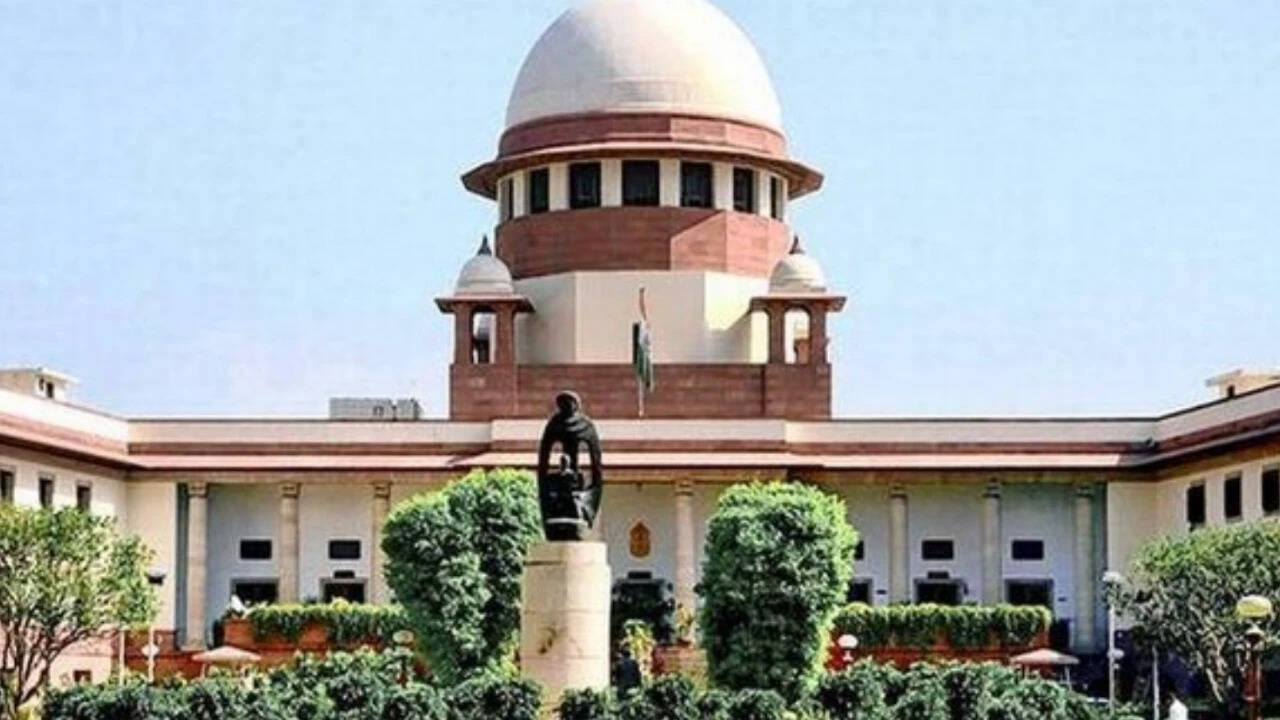
Photo: Times of India
Supreme Court rules 24‑hour custody clock starts at moment liberty is restricted
TL;DR
- 24‑hour deadline for magistrate production begins when a person’s freedom is curtailed
- Court rejects any buffer between detention and arrest
- Extended detention beyond 24 hours mandates release
- Decision applies to all statutes, including special laws
- Judgment arose from NDPS‑related arrests in Tripura
The Supreme Court held that the mandatory 24‑hour period for presenting a detained person before a magistrate starts from the moment the individual’s liberty is curtailed, not from the formal recording of an arrest.
A bench led by Justices Ujjal Bhuyan and A.S. Chandurkar dismissed the notion of a separate ‘buffer’ period, stating that any distinction between detention and arrest is unconstitutional.
The judgment arose from appeals by four people arrested under the NDPS Act after a seizure of 11.03 kg of yaba tablets in Tripura; they were detained on September 29, 2025, but formally shown as arrested the next morning, exceeding the 24‑hour limit.
The court emphasized that the constitutional protection under Article 22(2) applies uniformly, overriding any special‑law provisions that restrict bail, and that failure to produce the detainee within the stipulated time requires immediate release.
The decision also repudiated earlier high‑court rulings that allowed a pre‑arrest detention period to be excluded from the 24‑hour calculation, reinforcing the primacy of fundamental rights over statutory interpretations.
Why It Matters
The ruling reinforces constitutional safeguards for anyone detained by law‑enforcement in India, including Indian nationals living abroad who may travel back for legal matters. By ensuring that the 24‑hour limit starts the instant liberty is restricted, the decision curtails opportunities for prolonged custody without judicial oversight, a concern often highlighted in diaspora communities. The clarification also affects how Indian authorities handle cases under special statutes such as the UAPA and PMLA, which have implications for cross‑border investigations and cooperation with U.S. and Canadian law‑enforcement agencies.
Nov 5, 2026 · Updated 11/5/2026, 6:52:43 AM · Reported with: The Hindu, Hindustan Times, Times of India
Sources (3)
NRI Bytes writes its own articles from the reporting below.
The Hindu — 24-hour to produce before Magistrate starts from detention, not ‘formal arrest’: Supreme CourtHindustan Times — Supreme Court ends distinction between detention and arrest, says 24-hour clock starts when liberty is curtailedTimes of India — 24-hour arrest clock starts from detention, not formal arrest: Supreme CourtUp next · Politics
Hundreds take out rally in Manipur's Ukhrul seeking end to ethnic strife, abrogation of SoO pact
Read next →
More stories

Delhi Police brings back rape accused from Abu Dhabi with help of Interpol